
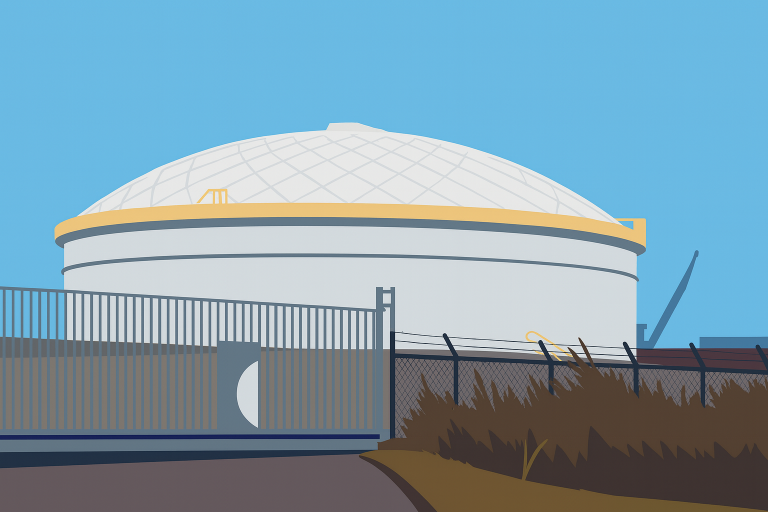
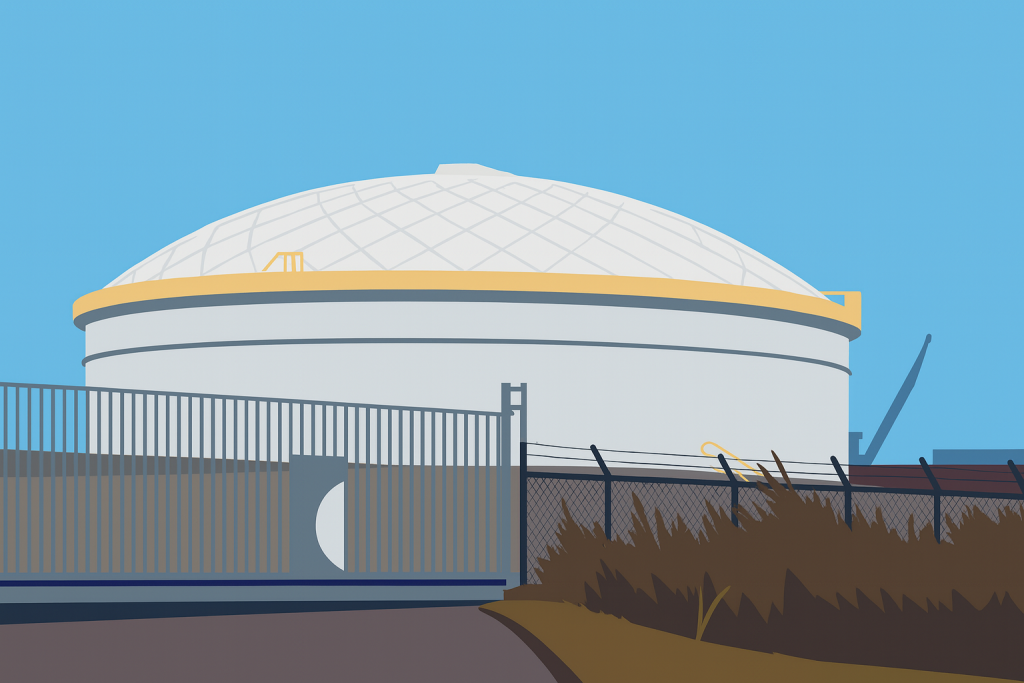
Dome roof tanks introduce more variables than fixed roof designs, but when the acoustic path is managed correctly, ultrasonic s still perform reliably. These tanks are common in crude oil, petrochemical, and other volatile liquid storage where conditions inside the headspace can shift with temperature, vapor density, and process changes. Even with those factors, the core measurement principle remains straightforward: preserve a clean line-of-sight to the liquid surface and prevent internal structures from intercepting the echo. Do that, and ultrasonic tank level measurement becomes a practical, low maintenance option.
In the field, the biggest determinant of performance isn’t the liquid itself but the tank geometry. Dome roofs often include internal floating roofs, support columns, guide poles, or mixers that can scatter or partially block the acoustic signal. Ultrasonic s will still work, but the sensor needs to be positioned where the echo path isn’t competing with interference from hardware inside the tank. Engineers who account for those structures upfront avoid the common problems of false echoes or reduced range.
From Migatron’s perspective, reliability in dome roof tanks comes down to controlling three variables: mounting, alignment, and vapor exposure. Mounting should isolate the sensor from roof vibration, alignment should point directly at the calmest liquid area, and the sensor face should be kept clear of obstructions or spray patterns during agitation. Once these basics are addressed, the tank’s internal vapor conditions typically don’t prevent a clean ultrasonic return. Even in heavy hydrocarbon environments, the air column remains suitable for time-of-flight measurement as long as the sensor’s materials and sealing can handle the chemistry.
Within the tank you will need a long range sensor for measurement, but for supporting equipment we recommend the RPS-409A-IS2 Intrinsically Safe Ultrasonic Sensor for applications with sensing ranges between 4 to 216 inches (varies by model). The intrinsically safe design makes it suitable for hazardous areas where these tanks are typically installed. When used, the sensor maintains stable readings even as vapor density changes day to day, which is a common condition in crude oil and volatile liquid storage.The sensor can be used in external mounting configurations such as measuring level in day tanks, sumps, or transfer vessels, providing reliable level feedback during both filling and draw down cycles in support of the dome roof tank.
For dome roof tanks, ultrasonic s aren’t a plug-and-play drop-in, they’re a controlled installation. But once the geometry is respected and the sensor is placed with a clear acoustic path, the measurement becomes reliable, repeatable, and insulated from many of the maintenance issues that hamper contact based technologies. When designed correctly, ultrasonic level monitoring in dome roof tanks and its support equipment, provide engineers with a stable measurement method that performs well across the entire operation.