
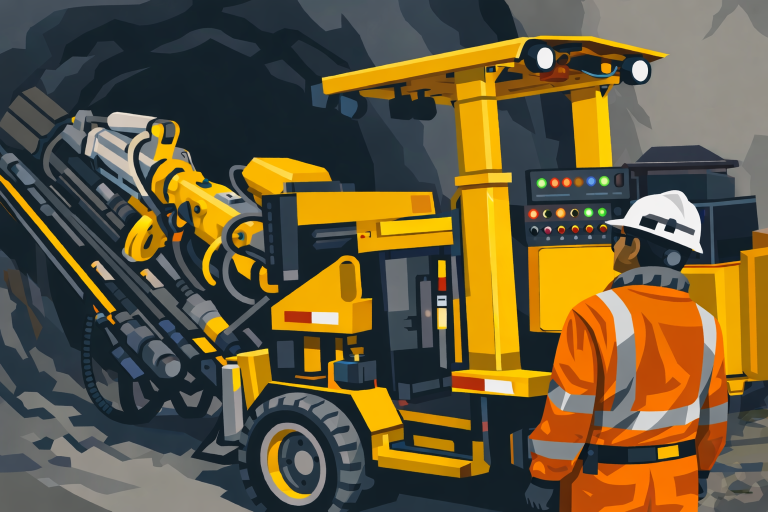
Mining operations frequently take place in environments where combustible gases or dust may be present. Underground mines may contain methane gas, while coal dust or other fine particulate materials can create explosive atmospheres.
In these environments, instrumentation must be designed to operate safely without introducing ignition sources such as sparks, arcs, or excessive heat. For engineers and OEM equipment manufacturers planning mining systems, understanding hazardous area certifications is essential.
Standards for ATEX, IECEx, and ANZEx define how equipment must be designed, tested, and manufactured, for use in explosive atmospheres.
Ultrasonic sensors are widely used in mining automation for applications such as bin level monitoring, conveyor belt alignment detection, and material handling systems. When installed in hazardous environments, these sensors must meet strict intrinsic safety requirements and carry appropriate approvals.
This article explains the role of ATEX, IECEx, and ANZEx certifications and how intrinsically safe ultrasonic sensors are integrated into hazardous areas.
What Is ATEX Certification?

ATEX refers to two European Union directives governing equipment used in explosive atmospheres:
• Directive 2014/34/EU for equipment manufacturers
• Directive 1999/92/EC for workplace safety
These directives require manufacturers to design equipment that cannot ignite combustible gas or dust.
ATEX regulations also require hazardous areas to be classified into zones based on explosion risk.
Group I
Equipment of Group I is intended for use in mines susceptible to firedamp.
Group II
Equipment of Group II is intended for use in areas with an explosive gas atmosphere other than mines susceptible to firedamp.
Group III
Equipment of Group III is intended for use in areas with an explosive dust atmosphere other than mines susceptible to firedamp.
Equipment installed in these areas must be approved for the appropriate zone classification.
For mining equipment manufacturers operating in European markets, ATEX certification is typically required for hazardous area instrumentation.
IECEx Certification for Global Hazardous Area Compliance

While ATEX applies specifically to the European Union, IECEx provides an international certification system for equipment used in explosive atmospheres.
The IECEx system is based on standards developed by the International Electrotechnical Commission (IEC) and is recognized in many industrial markets around the world.
IECEx certification simplifies global deployment of hazardous location equipment by providing a standardized evaluation process accepted across multiple countries.
For OEMs designing equipment intended for international markets, IECEx certification can significantly simplify regulatory compliance.
ANZEx Certification for Australia and New Zealand

ANZEx is the framework used in Australia and New Zealand for equipment operating in explosive atmospheres.
The ANZEx system aligns closely with IECEx standards while addressing regional regulatory requirements. Equipment certified under IECEx may often be accepted under ANZEx with additional documentation or evaluation.
Mining operations in Australia frequently require ANZEx certification due to strict safety regulations governing hazardous industrial environments.
For equipment manufacturers supplying sensors or instrumentation to Australian projects, ANZEx certification is often necessary for regulatory approval.
Intrinsically Safe Sensors
To explore ultrasonic sensors with the above mentioned approvals, visit Migatron’s Intrinsically Safe Sensors page.
You can also contact the Migatron engineering team for assistance with sensor selection and hazardous area system design.